
GLP-1 vs GLP-1/GIP Dual Agonist Research: What the GIP Receptor Adds
Single-receptor incretin agonism has a two-decade literature; dual agonism has rewritten part of it in five years. Here is the comparison for researchers.
Published 2026-09-18 · APX Labs Research Desk · For laboratory research context only — not medical advice.
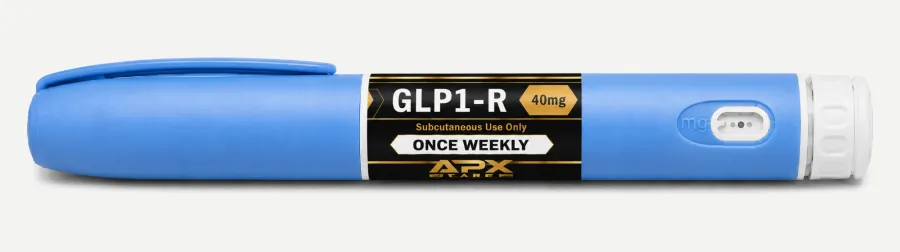
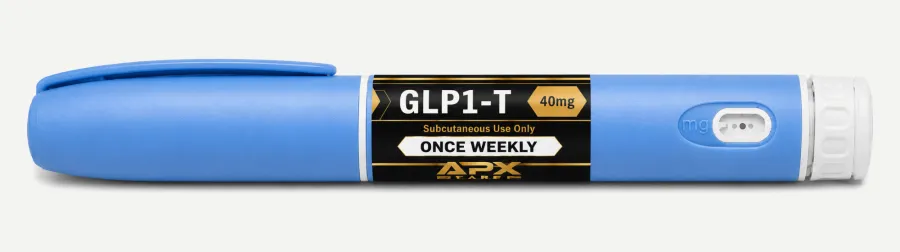
GLP-1 receptor agonists activate one incretin receptor; unimolecular dual agonists activate both GLP-1R and GIPR with one peptide. The research literature reports effects of dual agonism on food preference, thermogenesis and metabolic markers that differ from GLP-1 agonism alone, and receptor-crosstalk studies are now examining why. APX Labs supplies one research pen of each class. Neither is a drug product.
The incretin system
Incretins are gut hormones released after eating that amplify glucose-dependent insulin secretion. There are two: glucagon-like peptide-1 (GLP-1), from intestinal L-cells, and glucose-dependent insulinotropic polypeptide (GIP), from K-cells. Both are cleaved within minutes by the enzyme DPP-IV, which is why synthetic long-acting analogs exist. The physiology of GLP-1 is reviewed in Holst's *Physiological Reviews* article [1] and the whole proglucagon-derived family in a 2026 update [2].
GLP-1 receptor agonists
GLP-1R agonists are analogs of GLP-1 engineered to resist DPP-IV — through amino-acid substitutions, fatty-acid side chains that bind albumin, or both — extending half-life from minutes to days. Drucker's *Cell Metabolism* review is the reference for their mechanisms of action [3]: potentiated insulin secretion, suppressed glucagon, slowed gastric emptying, and central effects on appetite pathways. More recent work examines anti-inflammatory actions beyond the metabolic ones [4]. GLP1-R supplies an agonist of this class in a research format.
Dual GLP-1/GIP agonists
For years GIP was considered the weaker incretin. That changed with unimolecular co-agonists — single peptides engineered to activate both receptors. In rodent research, a dual agonist selectively reduced preference for fat [5] and produced a thermogenic-like signature in brown adipose tissue [6]; plasma-proteome profiling has been used to characterise dual agonism's effects [7]. Receptor-level work is now examining how GLP-1R and GIPR signalling interact [8]. GLP1-T supplies a dual agonist of this class in a research format.
What the GIP component adds — in the literature
- Food intake and preference models: effects on macronutrient preference not seen with GLP-1 agonism alone [5]
- Energy expenditure models: thermogenic signatures in adipose tissue [6]
- Receptor crosstalk: evidence that co-activation modulates insulinotropic signalling differently from either receptor alone [8]
- The direction of the field: triple agonists adding glucagon-receptor activity [9] and GIPR-selective long-acting agonists [10]
Specifications side by side
- Receptors: GLP1-R → GLP-1R only · GLP1-T → GLP-1R + GIPR
- Molecular weight: 4113.6 g/mol · 4813.5 g/mol
- Format: pre-filled research pen, 40 mg, both
- Testing: independent HPLC/MS, batch COA, both
- Price: GLP1-R $319 · GLP1-T $299
These pens are research reagents. They are not the prescription GLP-1 or dual-agonist medications, are not manufactured or approved for human use, and the literature above describes research on the drug class — not claims about these products. Research use only.
Frequently asked
What is the difference between a GLP-1 agonist and a GLP-1/GIP dual agonist?⌄
Is GIP the same as GLP-1?⌄
Are the APX Labs GLP-1 pens the same as prescription medications?⌄
References
Published research cited for context only. Citing a study does not imply APX Labs product was used in it, and is not a claim of any effect.
- Holst JJ (2007). The physiology of glucagon-like peptide 1. Physiol Rev. PubMed ↗
- Gasbjerg LS, et al. (2026). Proglucagon-derived peptides: human physiology and therapeutic potential. Physiol Rev. PubMed ↗
- Drucker DJ (2018). Mechanisms of Action and Therapeutic Application of Glucagon-like Peptide-1. Cell Metab. PubMed ↗
- Wong CK, Drucker DJ (2025). Antiinflammatory actions of glucagon-like peptide-1-based therapies beyond metabolic benefits. J Clin Invest. PubMed ↗
- Geisler CE, et al. (2023). Tirzepatide suppresses palatable food intake by selectively reducing preference for fat in rodents. Diabetes Obes Metab. PubMed ↗
- Samms RJ, et al. (2022). Tirzepatide induces a thermogenic-like amino acid signature in brown adipose tissue. Mol Metab. PubMed ↗
- Sachs S, et al. (2021). Plasma proteome profiles treatment efficacy of incretin dual agonism in diet-induced obese female and male mice. Diabetes Obes Metab. PubMed ↗
- Lindquist P, et al. (2026). GLP-1R and GIPR crosstalk modulates insulinotropic signaling pathways. Cell Chem Biol. PubMed ↗
- Knerr PJ, et al. (2022). Next generation GLP-1/GIP/glucagon triple agonists normalize body weight in obese mice. Mol Metab. PubMed ↗
- Roell W, et al. (2026). Long-acting GIPR agonist LY3537021 reduces body weight and fasting blood glucose in patients with T2D. Mol Metab. PubMed ↗
Compounds mentioned
Keep reading
- How to Store Research Peptides: Lyophilized, Reconstituted and Pre-FilledPeptides degrade by hydrolysis, oxidation and aggregation. Cold, dark and dry slow all three. The practical rules, by format.
- Lyophilized Vial vs Pre-Filled Pen: Choosing a Research FormatNine catalog compounds ship as vials, five as pens. The choice is about flexibility versus consistency, not quality.
Ready to start your research?
Third-party tested. COA-backed. Shipped discreetly. For research use only.