
BPC-157 vs TB-500: What the Research Actually Compares
The two most-requested recovery-category peptides are structurally unrelated and studied through different pathways. Here is the side-by-side, with sources.
Published 2026-09-18 · APX Labs Research Desk · For laboratory research context only — not medical advice.
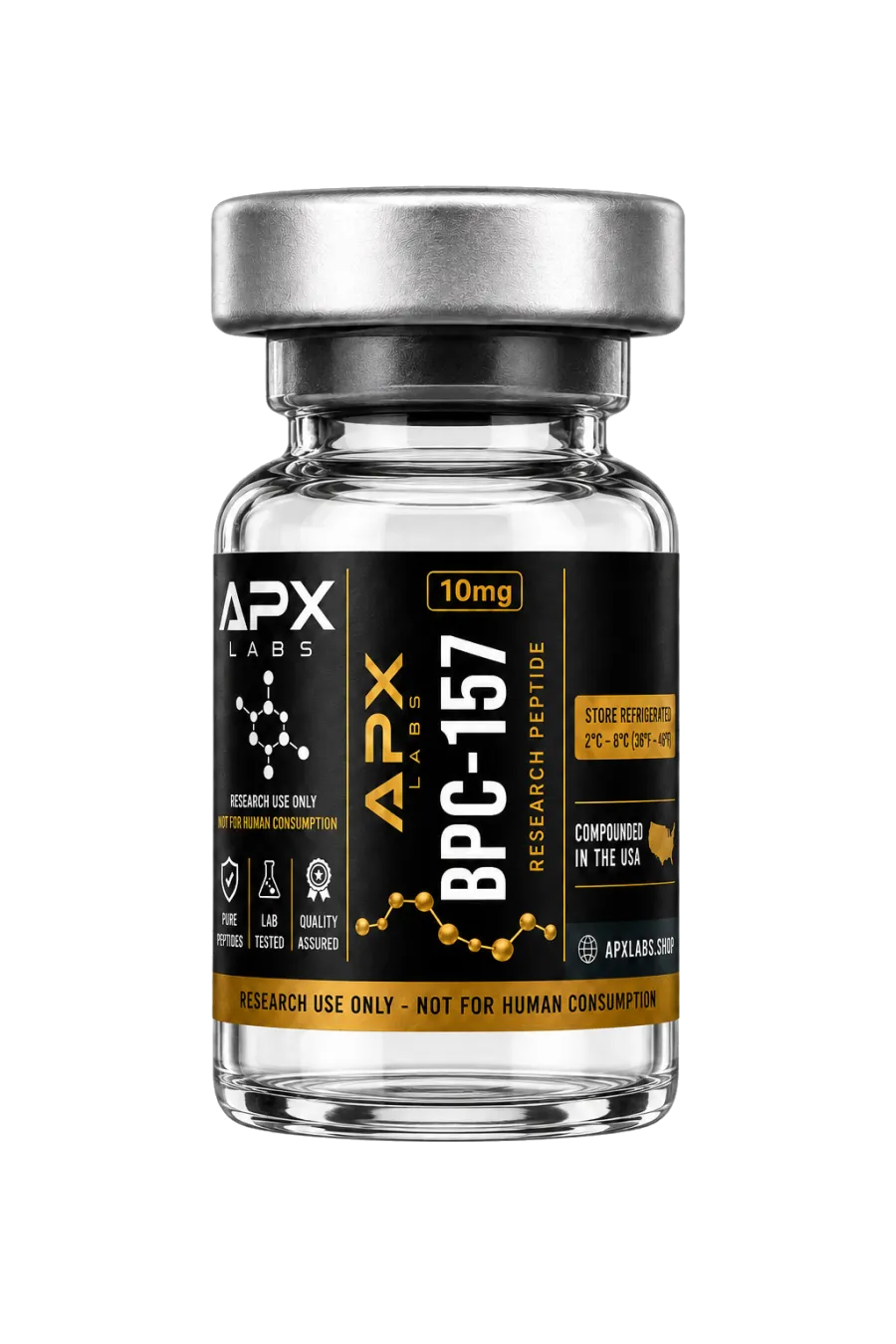
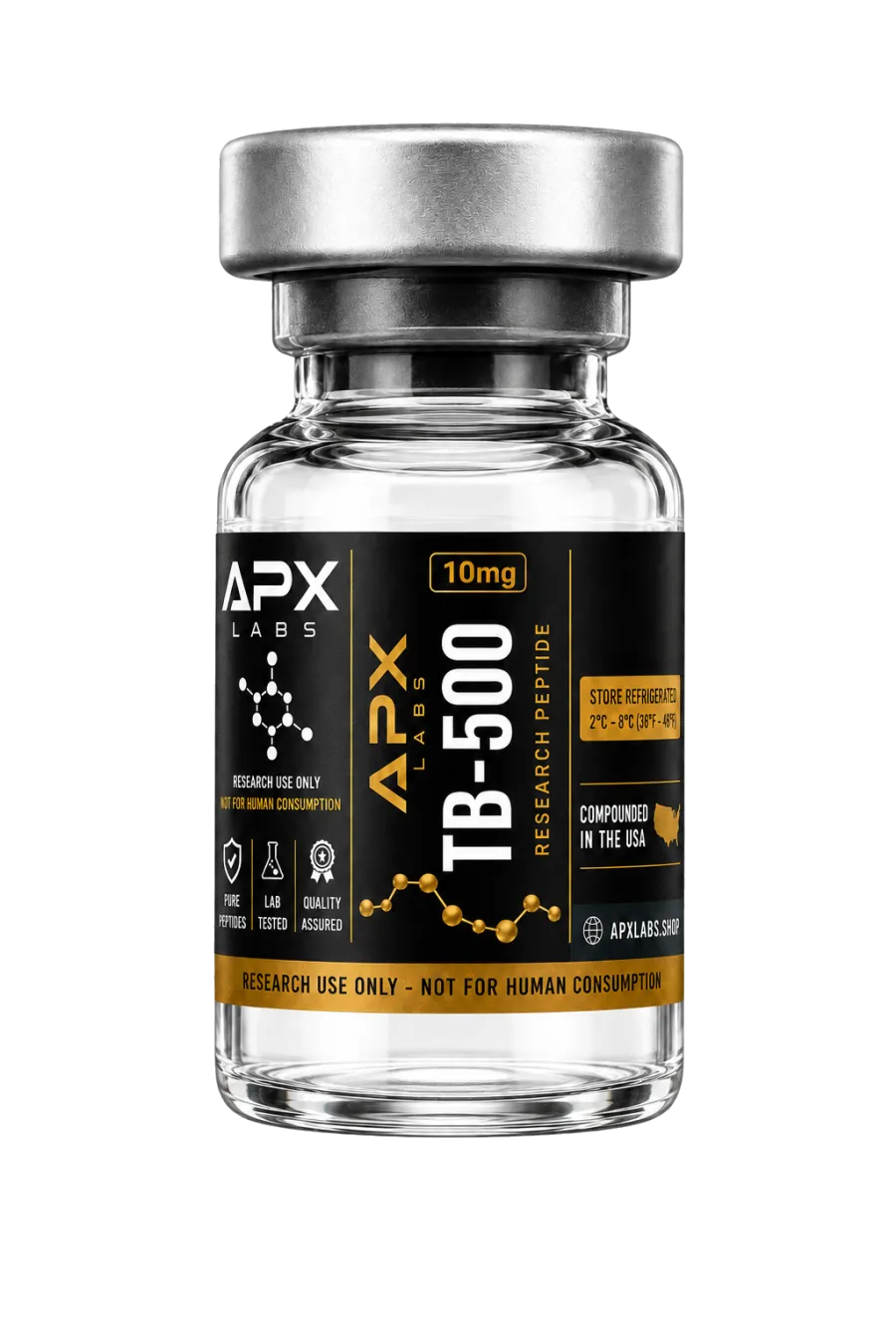
BPC-157 is a 15-amino-acid peptide derived from a gastric protein, studied mainly in tendon, ligament and gut-lining models. TB-500 is a 7-residue synthetic fragment of thymosin β4, an actin-binding protein, studied for cell migration and angiogenesis. They share a research category, not a mechanism. Both are supplied as 10 mg lyophilized vials with batch COAs, and as a pre-blended pen.
What each peptide is
BPC-157 — Body Protection Compound-157 — is a synthetic pentadecapeptide (Gly-Glu-Pro-Pro-Pro-Gly-Lys-Pro-Ala-Asp-Asp-Ala-Gly-Leu-Val, 1419.5 g/mol). Its sequence comes from a protective protein isolated from human gastric juice, and the originating research group has described its notable stability in acid [1].
TB-500 is a synthetic seven-residue fragment (Ac-Leu-Lys-Lys-Thr-Glu-Thr-Gln) of thymosin β4, a 43-amino-acid protein present in nearly all mammalian cells whose primary job is binding G-actin — the building block of the cytoskeleton. The fragment carries the actin-binding motif and is used in research as a smaller stand-in for that active site [2].
So the first difference is origin: one is gut-derived, the other is a piece of a ubiquitous cytoskeletal regulator.
Mechanisms studied
The BPC-157 literature — the great majority of it from one Croatian research group — frames the compound's studied activity around angiogenesis and the nitric-oxide system [3], with tendon and ligament models as the most-cited application: a 2011 rat study reported effects on tendon outgrowth, fibroblast survival and migration [4].
The thymosin β4 literature is broader and older. Its actin-sequestering role is the mechanistic foundation [2]; from that follow the cell-migration, angiogenesis and tissue-repair models in which it and its fragments are studied, including cardiac repair [5] and inflammation-through-autophagy work [6].
Research models compared
- Tendon and ligament: BPC-157 dominates this literature [4][7].
- Cell migration and wound-closure assays: thymosin β4 and fragments dominate [2][8].
- Gastrointestinal models: BPC-157, by origin [1].
- Cardiac models: thymosin β4 [5].
- Angiogenesis: both appear, through different studied pathways [3][2].
Can they be evaluated together?
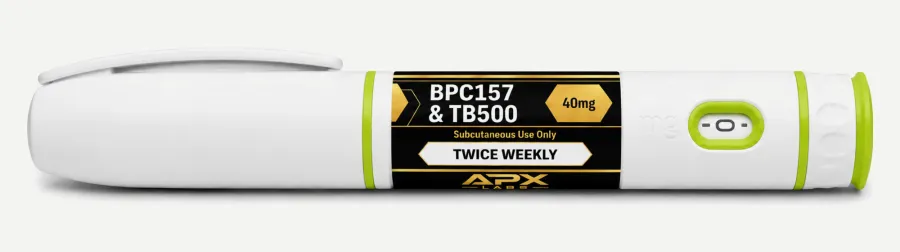
They often are, precisely because they are different: a laboratory studying a recovery model may want a gastric-derived peptide and an actin-pathway fragment in the same series. There is no published evidence of chemical incompatibility — they are co-formulated in the BPC-157 & TB-500 research pen, where the COA reports each component separately. Whether to combine them is a protocol decision for the researcher, not something APX Labs advises on.
Specifications side by side
- Length: BPC-157 15 residues · TB-500 7 residues
- Origin: gastric juice protein fragment · thymosin β4 fragment
- Molecular weight: 1419.5 g/mol · fragment mass as reported on the COA (the parent thymosin β4 is ~4,963 g/mol)
- Format: 10 mg lyophilized vial each; blend pen 40 mg
- Testing: independent HPLC purity + MS identity, batch COA
- Price: BPC-157 $50 · TB-500 $61 · blend $299
Everything above describes laboratory and animal research. APX Labs products are for research use only, are not for human or veterinary use, and nothing here is a claim of effect.
Frequently asked
Is TB-500 the same as thymosin beta-4?⌄
Which is more studied, BPC-157 or TB-500?⌄
Can BPC-157 and TB-500 be combined in research?⌄
References
Published research cited for context only. Citing a study does not imply APX Labs product was used in it, and is not a claim of any effect.
- Sikiric P, et al. (2025). Stable Gastric Pentadecapeptide BPC 157 as a Therapy and Safety Key. Pharmaceuticals (Basel). PubMed ↗
- Goldstein AL, Hannappel E, Kleinman HK (2005). Thymosin beta4: actin-sequestering protein moonlights to repair injured tissues. Trends Mol Med. PubMed ↗
- Sikiric P, et al. (2025). BPC 157 Therapy: Targeting Angiogenesis and Nitric Oxide's Cytotoxic and Damaging Actions. Pharmaceuticals (Basel). PubMed ↗
- Chang CH, et al. (2011). The promoting effect of pentadecapeptide BPC 157 on tendon healing involves tendon outgrowth, cell survival, and cell migration. J Appl Physiol. PubMed ↗
- Bock-Marquette I, et al. (2010). Thymosin beta4 and cardiac repair. Ann N Y Acad Sci. PubMed ↗
- Renga G, et al. (2018). Thymosin β4 limits inflammation through autophagy. Expert Opin Biol Ther. PubMed ↗
- Sikiric P, et al. (2026). Tendon, Ligament, and Muscle Injury, Osteotendinous, Myotendinous, and Muscle-to-Bone Junction Therapy. Pharmaceuticals (Basel). PubMed ↗
- Sosne G, et al. (2010). Biological activities of thymosin beta4 defined by active sites in short peptide sequences. FASEB J. PubMed ↗
Compounds mentioned
Keep reading
- How to Read a Peptide Certificate of Analysis (COA)Every APX Labs order ships with a batch-specific COA. This is how to read it — and how to tell a real one from a decorative one.
- How to Reconstitute Lyophilized Peptides for Laboratory UseLyophilized peptides arrive as a dry cake in a sealed vial. Turning that into a solution of known concentration is simple, but the details protect the material.
- How to Store Research Peptides: Lyophilized, Reconstituted and Pre-FilledPeptides degrade by hydrolysis, oxidation and aggregation. Cold, dark and dry slow all three. The practical rules, by format.
Ready to start your research?
Third-party tested. COA-backed. Shipped discreetly. For research use only.