
How to Reconstitute Lyophilized Peptides for Laboratory Use
Lyophilized peptides arrive as a dry cake in a sealed vial. Turning that into a solution of known concentration is simple, but the details protect the material.
Published 2026-09-18 · APX Labs Research Desk · For laboratory research context only — not medical advice.
Let the vial reach room temperature, wipe the stopper, add the solvent slowly down the glass wall rather than onto the powder, swirl — never shake — until clear, label with concentration and date, and refrigerate. Bacteriostatic water is the standard research solvent; sterile water is used when a preservative is unwanted.
What reconstitution means
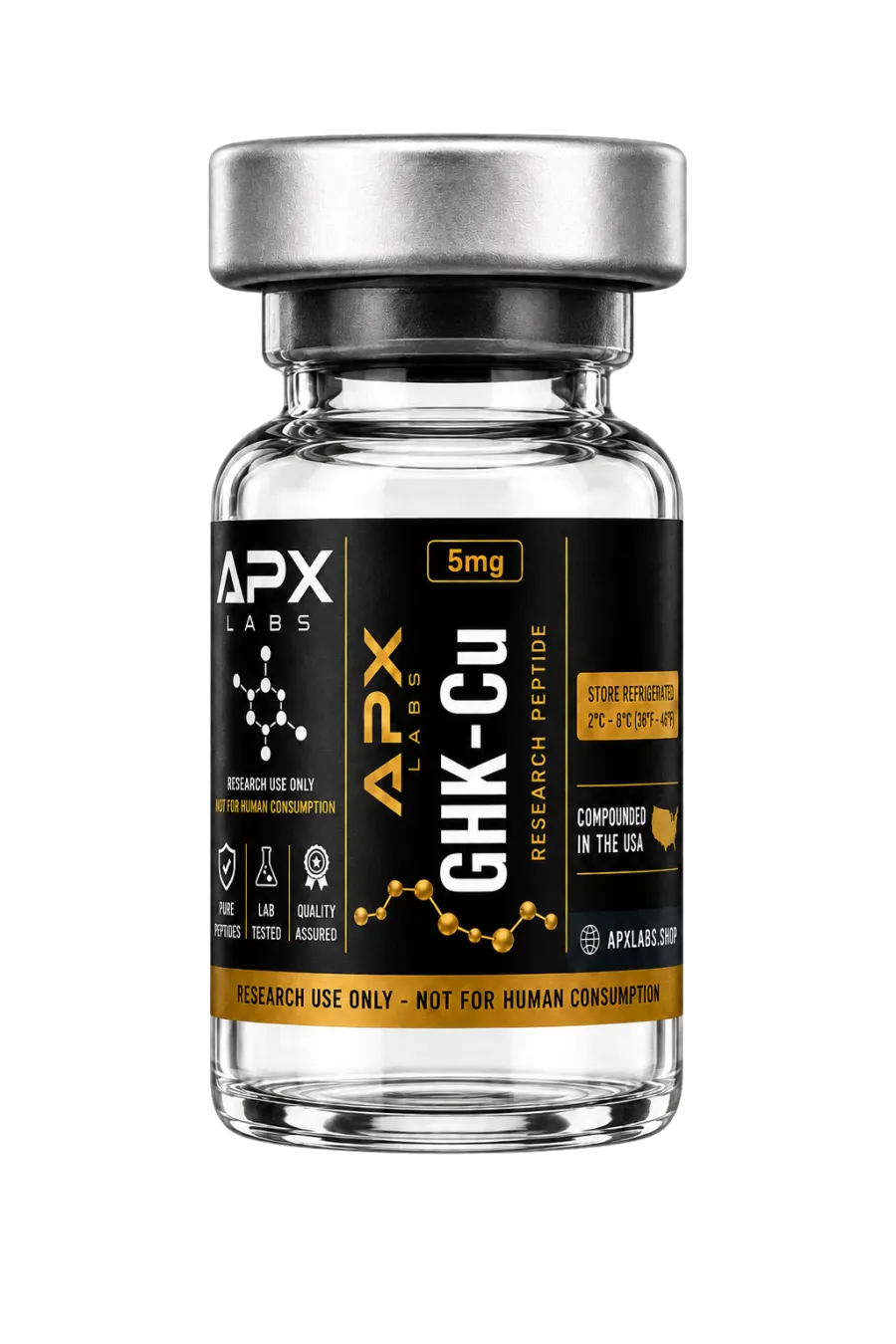
APX Labs vials contain the peptide lyophilized — freeze-dried to a powder or cake that is stable in cold storage. Reconstitution is dissolving that solid in a measured volume of solvent to produce a solution of known concentration (mg/mL). It is a laboratory technique, described here for laboratory use only.
Equipment
- The lyophilized vial, brought to room temperature
- Solvent: bacteriostatic water (0.9% benzyl alcohol) or sterile water
- A sterile syringe and needle for solvent transfer
- Alcohol swabs
- A label and marker
Choosing a solvent
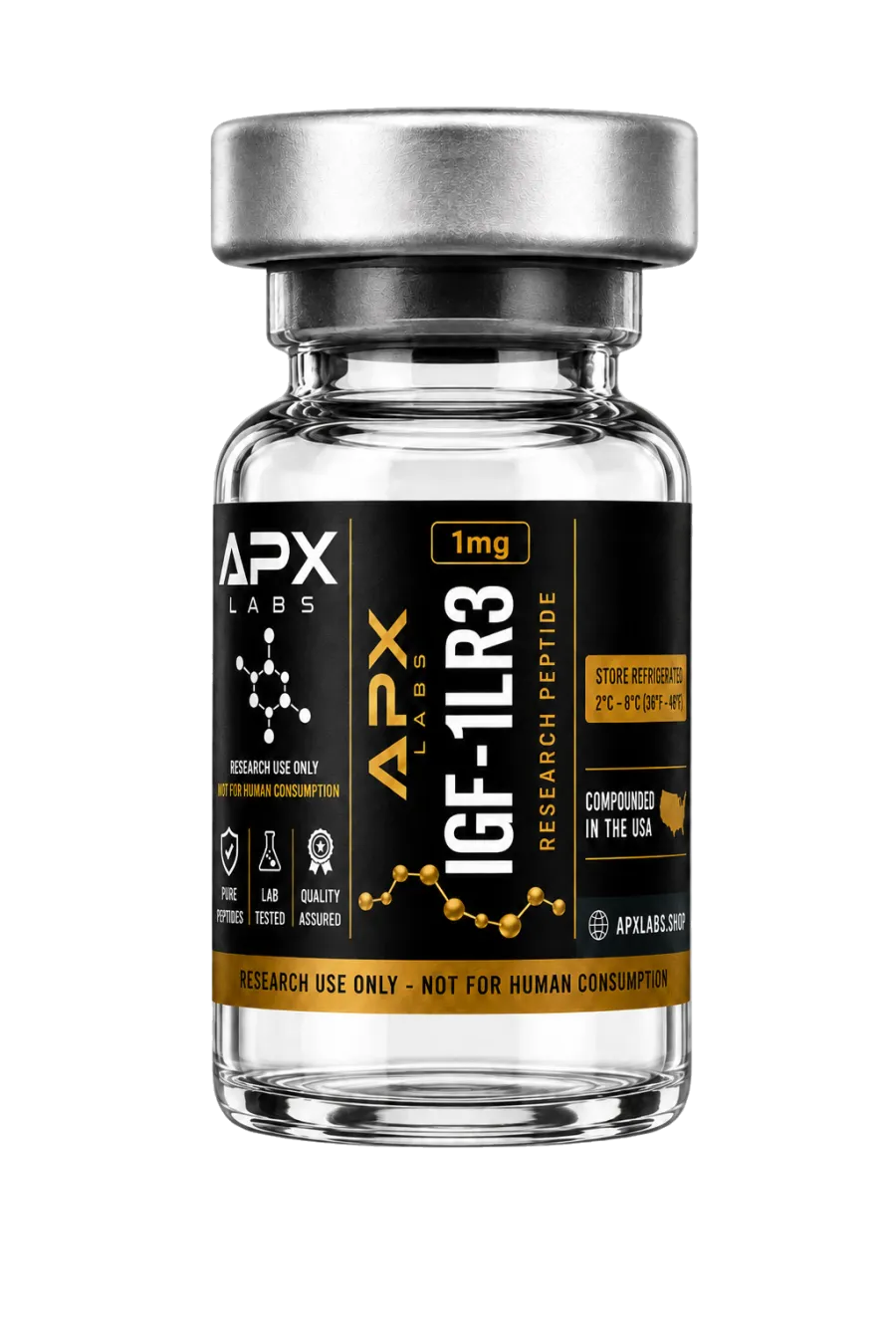
Bacteriostatic water — sterile water with 0.9% benzyl alcohol — is the default for research peptides because the preservative inhibits microbial growth in a vial that will be accessed more than once. Benzyl alcohol's behaviour with proteins is documented: at typical concentrations it can influence aggregation of some larger proteins [1], which is one reason larger constructs like IGF-1 LR3 are sometimes reconstituted in sterile water or a buffer instead. Sterile water for injection has no preservative; solutions made with it should be used promptly or aliquoted and frozen. Some peptides with poor water solubility are first dissolved in a small volume of a co-solvent — the COA or supplier note will say so; none of the standard APX Labs vials require it.
Step by step
1. Equilibrate. Take the vial from the refrigerator and let it reach room temperature (15–20 minutes). Adding solvent to a cold vial causes condensation and can shock the cake. 2. Calculate volume. Concentration = peptide mass ÷ solvent volume. A 10 mg vial plus 2 mL gives 5 mg/mL; plus 1 mL gives 10 mg/mL. Choose the volume that gives a working concentration convenient for the protocol, within the vial's capacity. 3. Swab. Wipe both stoppers with an alcohol swab and let them dry. 4. Draw the solvent into the syringe. 5. Add slowly, down the wall. Insert the needle so the solvent runs down the inside of the glass rather than jetting onto the cake. Peptides can be sensitive to shear; a gentle addition protects them. 6. Swirl, don't shake. Roll or swirl the vial gently until the solution is clear. Shaking foams the solution and can denature or aggregate the peptide. Most vials dissolve in under a minute; GHK-Cu turns its characteristic blue. 7. Inspect. The solution should be clear and free of particles. Persistent cloudiness suggests poor solubility or degradation — note it and contact the supplier. 8. Label with peptide name, lot, concentration and reconstitution date. 9. Refrigerate immediately.
Storage after reconstitution
A reconstituted peptide is far less stable than the lyophilized cake. Keep it at 2–8 °C, protected from light, and use it within the window stated on the COA. For longer holds, aliquot into single-use volumes and freeze at −20 °C; avoid repeated freeze–thaw cycles, which degrade peptides. Formulation and drying science for peptide stability is its own literature [2]. Full storage guidance: peptide storage guide.
Pre-filled pens
APX Labs research pens (GLP1-R, GLP1-T, NAD+/B12, KLOW, BPC-157 & TB-500 blend) arrive already in solution and skip this process entirely — see vial vs pen.
This guide describes laboratory handling of research reagents. It is not administration or dosing guidance of any kind. APX Labs products are for research use only.
Frequently asked
Should I use bacteriostatic water or sterile water to reconstitute peptides?⌄
Why swirl instead of shake?⌄
How long does a reconstituted peptide last?⌄
References
Published research cited for context only. Citing a study does not imply APX Labs product was used in it, and is not a claim of any effect.
- Roy S, Jung R, Kerwin BA et al. (2005). Effects of benzyl alcohol on aggregation of recombinant human interleukin-1-receptor antagonist in reconstituted lyophilized formulations. J Pharm Sci. PubMed ↗
- Mane AV, Arora K, Srivastava N et al. (2026). Metamorphosis in Drying Techniques for Biopharmaceuticals. Int J Pharm Compd. PubMed ↗
Compounds mentioned
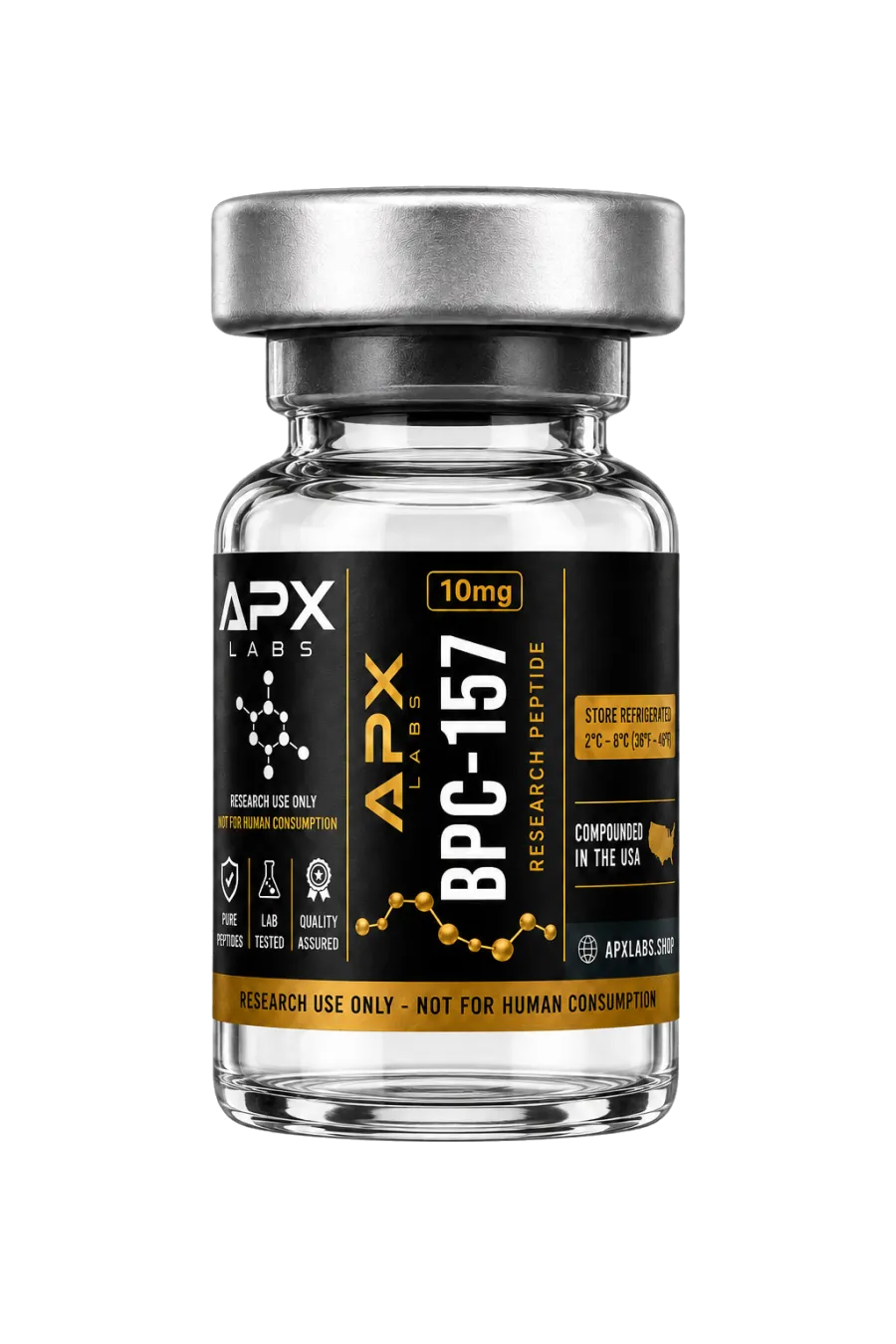
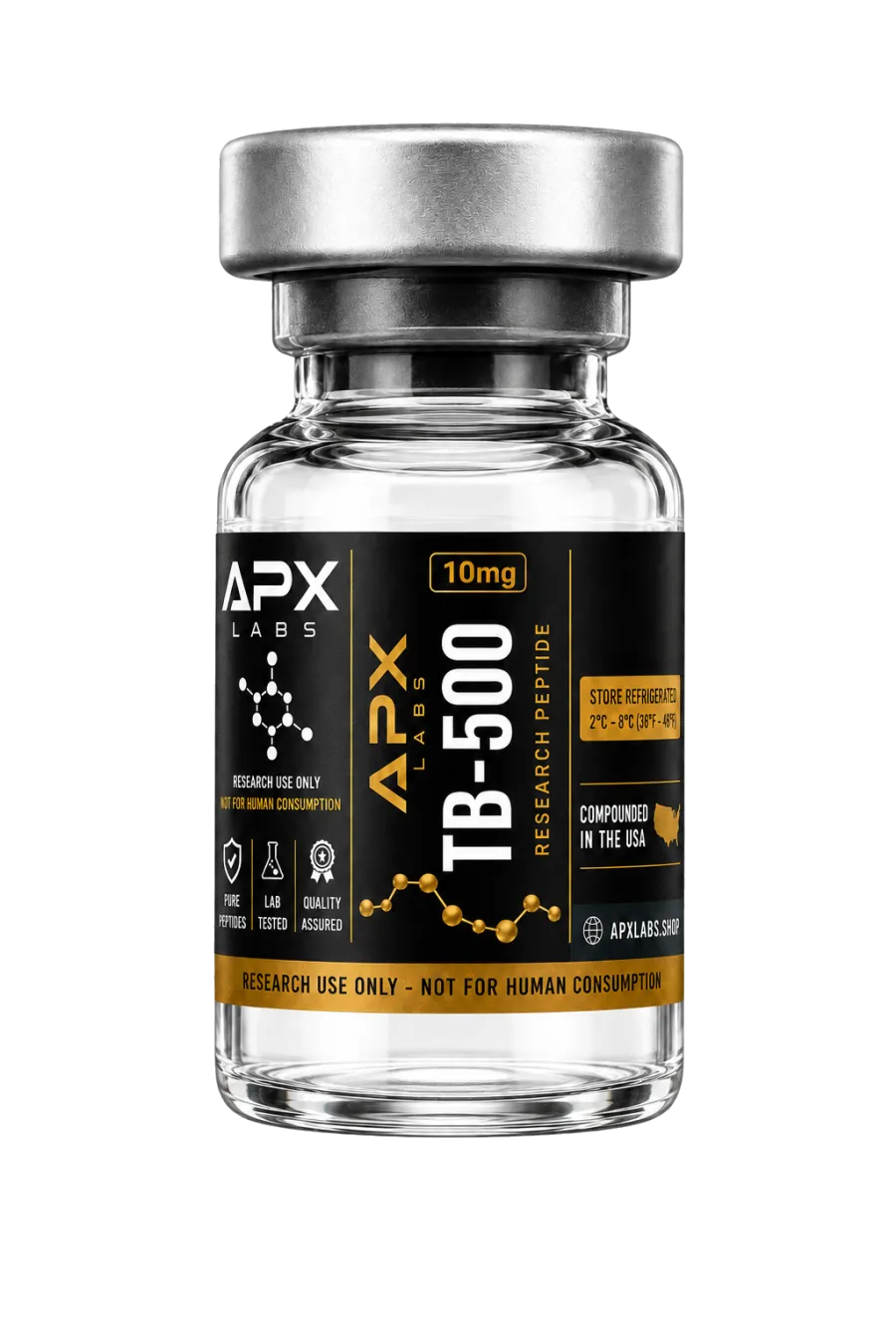
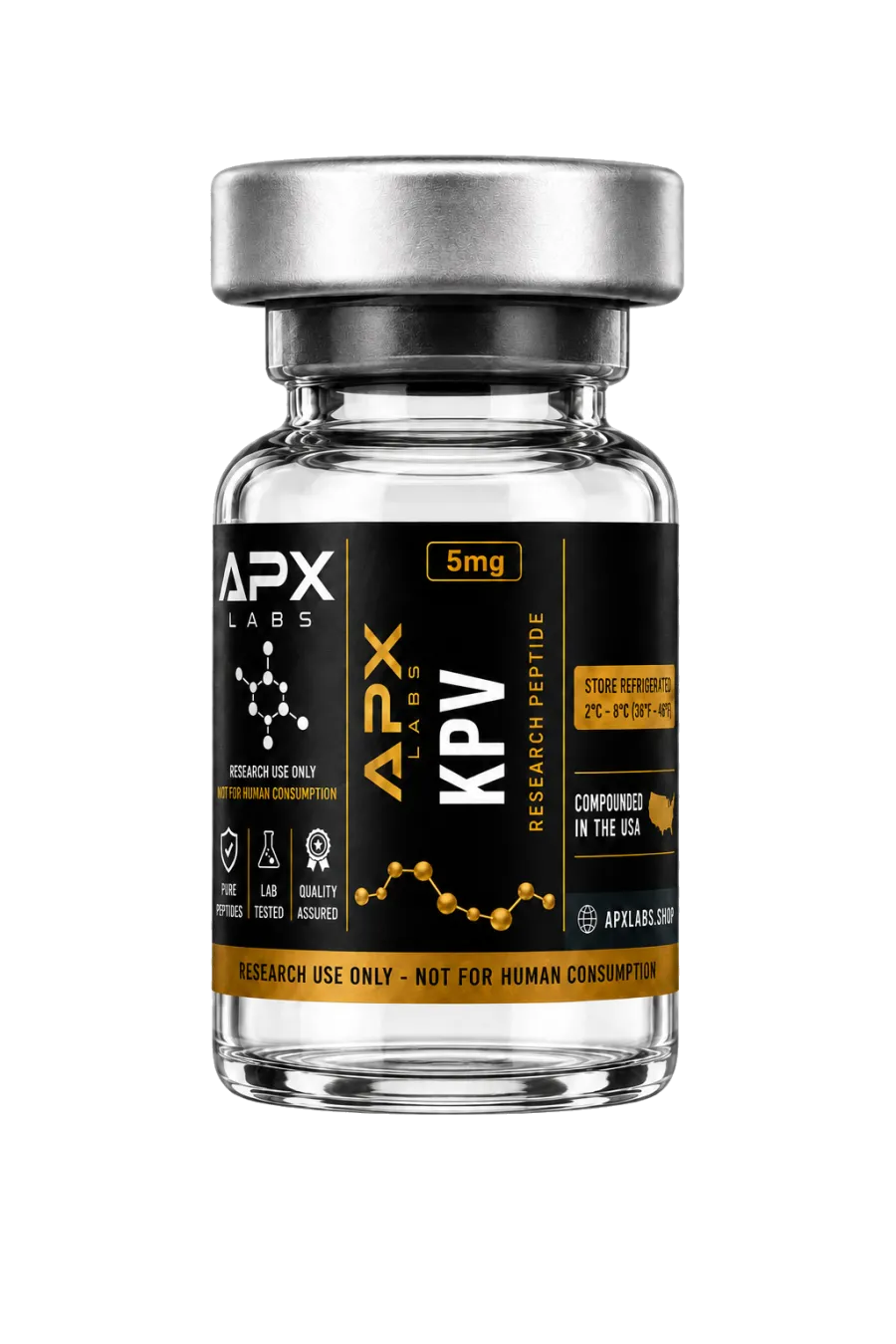
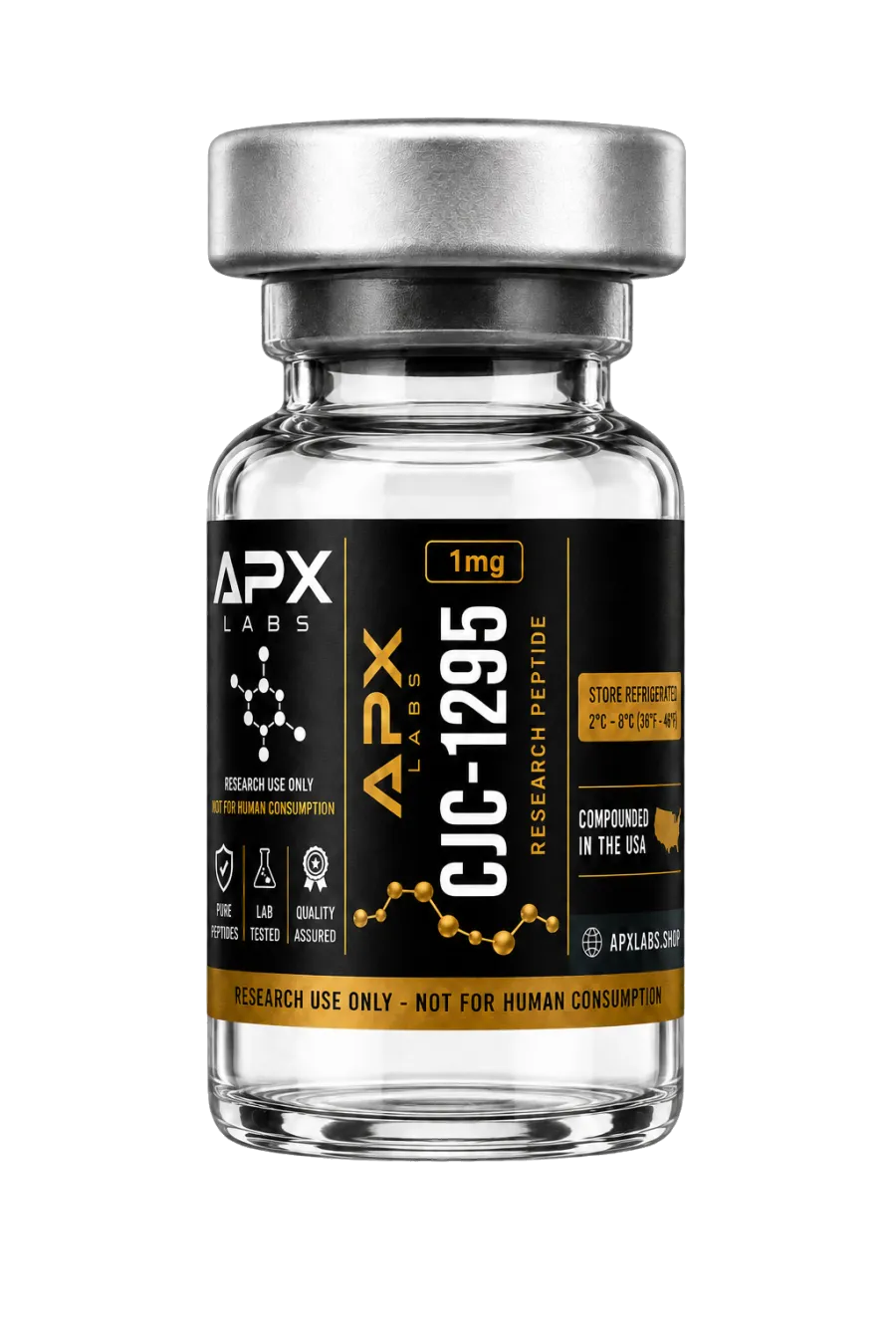
Keep reading
- BPC-157 vs TB-500: What the Research Actually ComparesThe two most-requested recovery-category peptides are structurally unrelated and studied through different pathways. Here is the side-by-side, with sources.
- How to Read a Peptide Certificate of Analysis (COA)Every APX Labs order ships with a batch-specific COA. This is how to read it — and how to tell a real one from a decorative one.
- Semax vs Selank: Two Russian Heptapeptides, Two Different Research QuestionsThey share a country of origin, a length and a stabilising tail — and almost nothing else. Here is how the research literature separates them.
Ready to start your research?
Third-party tested. COA-backed. Shipped discreetly. For research use only.